Time to Read
4–5 minutes
838 words
From Servers to Conversations: How AI Is Redefining WordPress Hosting in 2025
For years, choosing a web host meant comparing disk space, bandwidth, and uptime percentages. Today, that checklist feels outdated.
In 2025, hosting is no longer just about where your website lives — it’s about how much work the platform does for you. Thanks to AI, cloud-native infrastructure, and managed services, hosting has quietly evolved from a technical chore into a guided, almost conversational experience.
This article breaks down how modern hosting works, why managed WordPress hosting is becoming the default, and how AI-powered platforms are reshaping the entire website-building process.
In 2025, hosting is no longer just about where your website lives — it’s about how much work the platform does for you. Thanks to AI, cloud-native infrastructure, and managed services, hosting has quietly evolved from a technical chore into a guided, almost conversational experience.
This article breaks down how modern hosting works, why managed WordPress hosting is becoming the default, and how AI-powered platforms are reshaping the entire website-building process.
The Old Definition of Hosting Is Broken
Traditional hosting was built on shared environments:
- One server
- Hundreds of websites
- One serverEveryone competing for the same resources
If a neighbouring site had a traffic spike, your site slowed down. Security issues spread more easily. Performance optimisation relied on stacking plugins and hoping for the best.
A Simple Analogy
| Hosting Type | Real-World Comparison |
| Shared Hosting | Apartment building with shared water and electricity |
| Managed WordPress Hosting | Fully serviced apartment with on-site maintenance |
| Cloud Hosting | Modular home that expands when guests arrive |
The industry is now moving rapidly toward the second and third models.
The Rise of AI-Native Hosting Platforms
One of the biggest shifts in hosting is the move from dashboards to dialogs.
Instead of manually configuring settings, users are increasingly talking to their hosting platforms.
Instead of manually configuring settings, users are increasingly talking to their hosting platforms.
Examples of AI-Driven Hosting Experiences
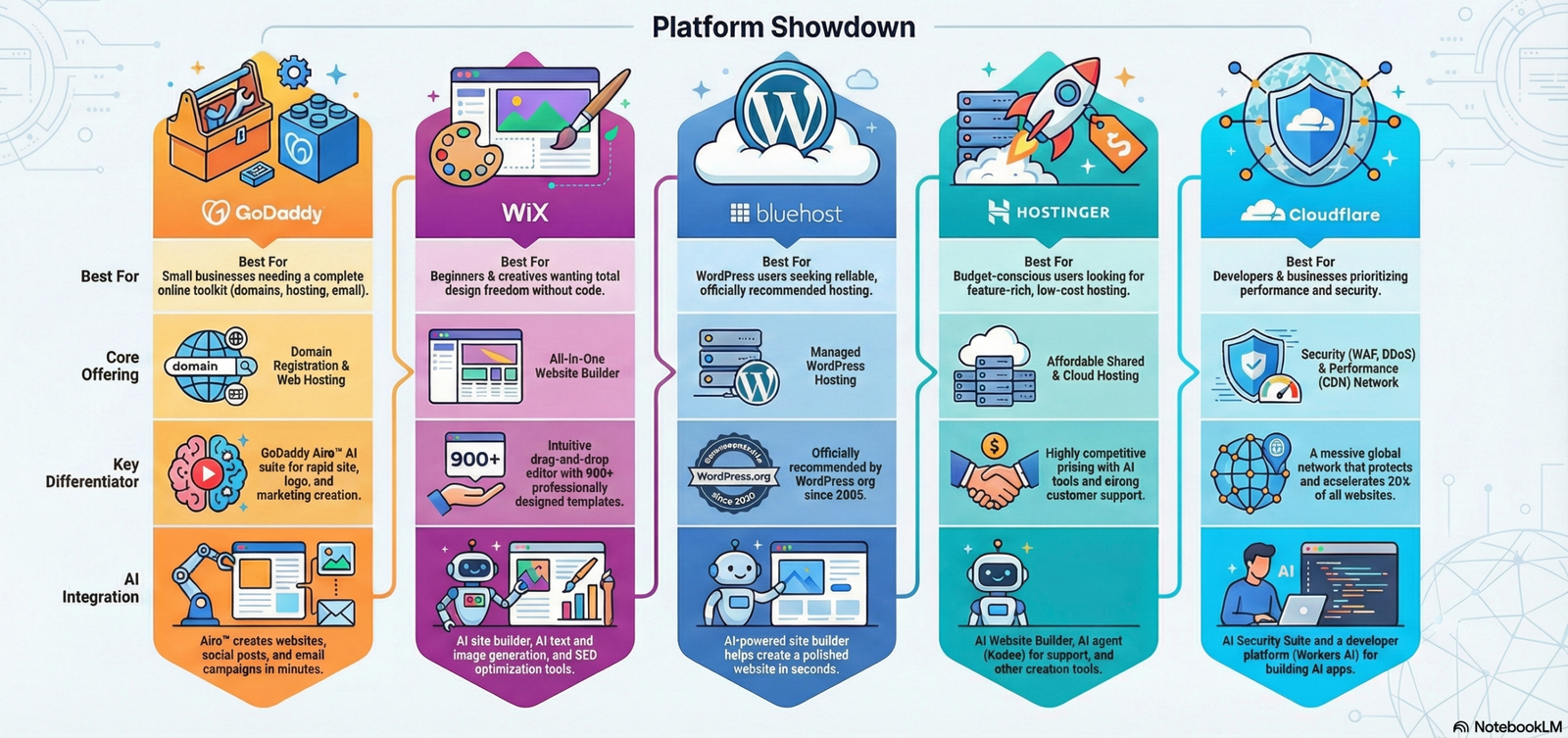
| Wix | Conversational AI that builds an entire website via chat |
| Hostinger | AI Website Builder + “Kodee” AI support agent |
| Squarespace | Blueprint AI creates layouts, copy, and images |
| Elementor Host | “Angie” AI manages hosting tasks and site operations |
| Bluehost | AI onboarding and content generation via WonderSuite |
Key takeaway:
Hosting is no longer something you configure — it’s something you request.
This shift dramatically lowers the barrier to entry for small businesses, creators, and non-technical users.
This shift dramatically lowers the barrier to entry for small businesses, creators, and non-technical users.
Why Managed WordPress Hosting Is Becoming the Default
Managed WordPress hosting removes most of the invisible work that traditionally made WordPress feel “hard.”
What Managed WordPress Hosting Includes
| Feature | Why It Matters |
| Automatic core & plugin updates | Reduces security vulnerabilities |
| Server-level caching | Faster load times without plugins |
| Built-in security patches | Protection before threats become public |
| Automatic backups | Easy recovery from mistakes or hacks |
| Expert WordPress support | Help from people who know WP deeply |
Popular Managed WordPress Providers
For most websites, managed hosting now delivers better performance and peace of mind than traditional shared hosting — even at similar price points.
How Modern Hosts Deliver Faster Sites
| Website Technology | Used By | Benefit |
| Google Cloud Infrastructure | Elementor Host, SiteGround | Global scalability and reliability |
| Enterprise CDN | Cloudflare, Elementor Host | Faster global content delivery |
| Server-side caching | Bluehost, SiteGround | Reduced load times |
| Auto-scaling resources | lementor Host, xCloud | Handles traffic spikes automatically |
Cloudflare, while not a traditional host, plays a critical role as a connectivity cloud, sitting in front of websites to improve speed, reliability, and security at a global scale.
Speed Is Now Cloud-Native (Not Plugin-Based)
Website speed used to be something you optimized after launch. In modern hosting, speed is baked into the infrastructure.
Security Has Moved Far Beyond “Free SSL”
An SSL certificate is now the bare minimum.
Modern hosting platforms protect sites at multiple layers:
Modern hosting platforms protect sites at multiple layers:
Modern Hosting Security Stack
| Security Feature | Purpose |
| DDoS protection (2+ Tbps capacity) | Prevents large-scale traffic attacks |
| Web Application Firewall (WAF) | Blocks malicious traffic |
| Malware scanning & removal | Detects and cleans infected files |
| Account isolation | Prevents cross-site contamination |
| Automated patching | Closes vulnerabilities early |
Platforms leveraging Cloudflare’s security network or custom WAFs offer significantly stronger protection than legacy shared hosting.
The “Bring Your Own Server” Revolution
For developers, agencies, and high-traffic sites, a new model is gaining traction: bring your own cloud provider.
How xCloud Changes the Game
xCloud allows users to:
Who This Is For
| User Type | Why It Works |
| Agencies | Manage multiple client sites efficiently |
| Developers | Full control with reduced ops work |
| SaaS founders | Scalable infrastructure without DevOps overhead |
Think of it as a modular home: you control the land, but someone else handles the maintenance.
Choosing the Right Hosting Model in 2026
Here’s a quick decision guide based on real-world needs:
| User Type | Best Fit |
| Beginners & solopreneurs | Wix, Squarespace, GoDaddy |
| Small businesses | Bluehost, Hostinger |
| Designers & agencies | Elementor Host |
| Performance-focused stores | SiteGround |
| Developers & advanced users | xCloud + Cloudflare |
Final Thoughts: Hosting Is Now a Service, Not a Server
In 2025, the best hosting provider isn’t defined by storage limits or CPU cores. It’s defined by how much complexity it removes.
AI-assisted setup, managed WordPress environments, cloud-native speed, and enterprise-grade security are no longer premium add-ons — they’re becoming standard expectations.
If traditional hosting felt like renting a server, modern hosting feels like hiring a team.
And that’s a shift worth paying attention to.
AI-assisted setup, managed WordPress environments, cloud-native speed, and enterprise-grade security are no longer premium add-ons — they’re becoming standard expectations.
If traditional hosting felt like renting a server, modern hosting feels like hiring a team.
And that’s a shift worth paying attention to.
Choosing A Web Hosting Platform In 2026
The key Players